When “Due Diligence” Isn’t Due Diligence
- SaveMPM
- Feb 4
- 3 min read

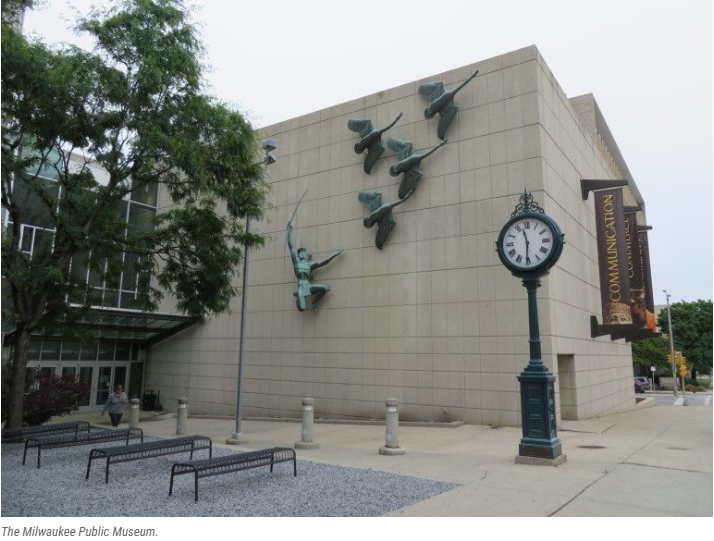
In 2022, Milwaukee County relied on a document labeled a “Due Diligence” report to justify a major, irreversible decision: vacating the current Milwaukee Public Museum building and proceeding with construction of a new facility.
In public governance, due diligence has a clear meaning. It requires a full and honest evaluation of assets, risks, and obligations—especially when public property, public funds, and irreplaceable cultural heritage are involved.
A review of the public record shows that this standard was not met.
What the 2022 Due Diligence Actually Evaluated
The 2022 Due Diligence report focused narrowly on building infrastructure, including:
HVAC and mechanical systems
Deferred maintenance estimates
Building envelope and systems life cycles
Code compliance and modernization needs
Long-term projected repair costs
These evaluations are appropriate for a facilities report.
They are not sufficient for evaluating a public museum.
What the Due Diligence Excluded
The Due Diligence did not include a documented inventory, valuation, or preservation analysis of:
Historic habitat dioramas
Architecturally integrated immersive environments
Federally funded Works Progress Administration (WPA) murals
Site-specific scenic art and built exhibits created over decades
Many of these environments are permanently embedded into the structure. Museum leadership has publicly stated that they cannot be removed without being destroyed.
Yet the Due Diligence contains no valuation of these assets, no accounting of their loss, and no analysis of what it would cost to preserve them versus abandoning them.
That omission is not minor. It fundamentally alters the decision framework.
Why This Makes the Financial Comparison Incomplete
County decision-makers were presented with a comparison that effectively asked:
How much does it cost to repair an aging building? vs.
How much does it cost to build a new one?
But that is not the real choice.
The real comparison should have been:
Repair infrastructure and preserve integrated public cultural assets vs.
Build new infrastructure and permanently lose integrated public cultural assets
When assets worth millions of dollars in public investment are excluded from the analysis, the comparison is no longer neutral or complete.
It is structurally skewed.
This Is a Governance Failure, Not a Sentimental Argument
This is not about nostalgia. It is not about resisting change. It is not about whether a new museum is desirable.
It is about whether public decision-making met the minimum standard of care required when disposing of public assets.
In standard public-sector and fiduciary practice, due diligence includes:
Identifying all assets
Assigning value
Clarifying ownership and stewardship responsibility
Accounting for loss as well as cost
When embedded cultural assets are ignored, the public is not given a full picture of what is being traded away.
The Ownership Question That Was Never Answered
Many of the Milwaukee Public Museum’s built-in environments predate the creation of the current nonprofit operator in 1992. They were created when Milwaukee County directly owned and operated the museum.
That raises a critical oversight question that the Due Diligence did not resolve:
Were these built-in environments treated as part of the County’s real property interest, or were they treated as removable “personal property”?
That classification determines:
whether they should have been inventoried,
whether they should have been valued, and
whether the County fulfilled its fiduciary duty as steward of public heritage.
This is not a technicality. It is legally and financially substantive.
The Bottom Line
A report that evaluates boilers and bricks but ignores the irreplaceable public works embedded inside the building does not meet the standard implied by the term due diligence.
Before irreversible actions proceed, the public deserves clear answers to basic questions:
Were historic dioramas and WPA works inventoried?
Were they assigned financial and cultural value?
Were their preservation or loss costs included in the analysis?
Public trust requires full accounting. Infrastructure alone is not the whole story.
Sources & Public Record
The concerns raised above are grounded in publicly available documents and professional standards, including:
Milwaukee County Due Diligence Report (2022)Interoffice communication and attachments associated with County File 22-454, evaluating building condition and infrastructure costs.
Milwaukee Public Museum, Inc. – Collections Policy (2021), File 21-259Adopted by Milwaukee County, establishing stewardship, deaccession, and fiduciary obligations for museum collections.
Milwaukee Public Museum, Inc. – Disposition Plan Policy language stating that items must be able to be moved safely in order to be disposed of.
American Alliance of Museums (AAM)Code of Ethics and Core Standards for Museums, including public trust and stewardship principles.
International Council of Museums (ICOM)Code of Ethics addressing deaccession, disposal, and treatment of collections held in public trust.
Works Progress Administration (WPA) Federal Art Program records Documenting federally funded artworks and public ownership obligations.
These sources establish that while building systems were evaluated, integrated public cultural assets were not fully accounted for in the 2022 Due Diligence process.


Comments