What Milwaukee Is Really Losing
- SaveMPM
- Jan 29
- 3 min read

The Documented Value of the Museum Assets Being Left Behind



In Part 1, we asked a simple question:
If the Milwaukee Public Museum is leaving an aging building behind, why is it also leaving behind the historic environments inside it?
In Part 2, we address the claim most often used to justify that decision — the idea that these dioramas and murals are “obsolete,” “low value,” or too costly to preserve.
The documented record points in a very different direction — and as move planning advances, decisions made now are irreversible.
These Are Not Decorative Backdrops
They Are Collection Assets
Photographs taken inside the Milwaukee Public Museum show interpretive plaques that explicitly state:
“The paintings are now part of the Museum’s collection.”
That language matters.
It means these works are:
Accessioned museum assets
Not temporary exhibit fabric
Not expendable décor
Subject to professional museum ethics and public-trust obligations
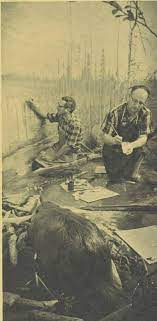
Many of the murals and dioramas were created during the WPA era, with named artists, documented dates, and institutional provenance. They were built to last — and to belong to the public.
What the Market Record Actually Shows
Claims that these works have “no value” collapse when compared to real-world data.
Paintings by George Peter, a WPA-era panorama painter who worked for the Milwaukee Public Museum, have sold at auction in the last decade for $5,500 to $19,200 — as detached canvases, removed from their original museum context.
Those auctioned works:
Were not integrated into dioramas
Were not part of intact educational environments
Were not embedded in a historic public institution
Yet they still commanded significant prices.
An intact WPA-era mural, retained in a museum collection and integrated into a historic exhibit context, carries greater, not lesser, value.
Dioramas Are Assemblages — Not Single Objects
A historic habitat diorama is not one thing.
It is an assemblage of authored components:
Painted panoramic background (often by a named scenic artist)
Sculpted terrain and architectural elements
Historic taxidermy mounts
Hand-modeled figures and botanicals
Integrated lighting and casework
Scientific and cultural interpretation
Professional appraisers do not value these as scrap materials.
They value them as integrated environments, using a component-based approach consistent with USPAP standards.
Conservative Valuation — Not Worst-Case, Not Inflated
Using standard appraisal methodology, conservative estimates show:
WPA-Era Miniature Dioramas (Charles R. Porteus)
Estimated $20,000–$55,000 per diorama
Approximately 55 surviving examples
Portfolio value: $600,000 to $2+ million
Medium & Large Habitat Dioramas
Estimated $125,000–$250,000+ each
Depending on scale, condition, and integration
Hall-Scale Environments
African Hall
Buffalo Hunt
Streets of Old Milwaukee
Dinosaur Environment
Replacement costs for these environments range from $750,000 to $4.5+ million per hall, based on contemporary fabrication, conservation, and artistic labor costs.
Total conservative value of assets at risk:➡ $18–$39 million
Total conservative replacement cost if destroyed:➡ $40–$85+ million
These figures are grounded in documented artists, dimensions, comparables, and accepted valuation frameworks — not speculation.






Dismantling Does Not Save Money
It Destroys Value
Once a historic diorama is dismantled:
Assemblage value is permanently lost
Provenance becomes fragmented
Murals become “orphaned”
Restoration costs increase dramatically
Public-trust scrutiny intensifies
In preservation economics, intentional dismantling of a historic assemblage can constitute economic waste — a term used in public-asset disputes and heritage litigation.
This is not a neutral decision.
Other Museums Faced This Moment — And Chose Preservation
Milwaukee’s approach stands in contrast to peer institutions:
Bell Museum (Minnesota): moved and restored historic dioramas
Field Museum (Chicago): preserved and reinterpreted classic halls
Natural History Museum of Los Angeles County: invested in conservation rather than replacement
Modernization did not require erasure.
That makes Milwaukee’s near-total abandonment of historic dioramas an outlier — not a standard practice.

The Issue Is Not “Old vs New”
It Is Stewardship vs Disposal
No one disputes the need for a new museum building.
What is in dispute is the quiet decision to treat tens of millions of dollars in public heritage as disposable — without appraisal, public accounting, or meaningful review.
That is not modernization.
That is abdication.
What the Public Is Now Justified in Demanding
Based on the documented evidence, the public has every right to call for:
An immediate pause on dismantling or destruction
Independent, USPAP-compliant appraisal of historic assets
A public inventory of dioramas and murals
Written justification for any proposed loss
Preservation review before demolition proceeds
These are reasonable requests. They are standard. And they are long overdue.
Once They’re Gone, They’re Gone Forever
You can build a new museum.
You cannot rebuild historic environments created by WPA artists, crafted by hand, and shaped by a century of public trust.
Milwaukee deserves progress. But it also deserves honesty about what that progress costs.
Modernization should not mean throwing the baby out with the bathwater.


Comments